Key Takeaways
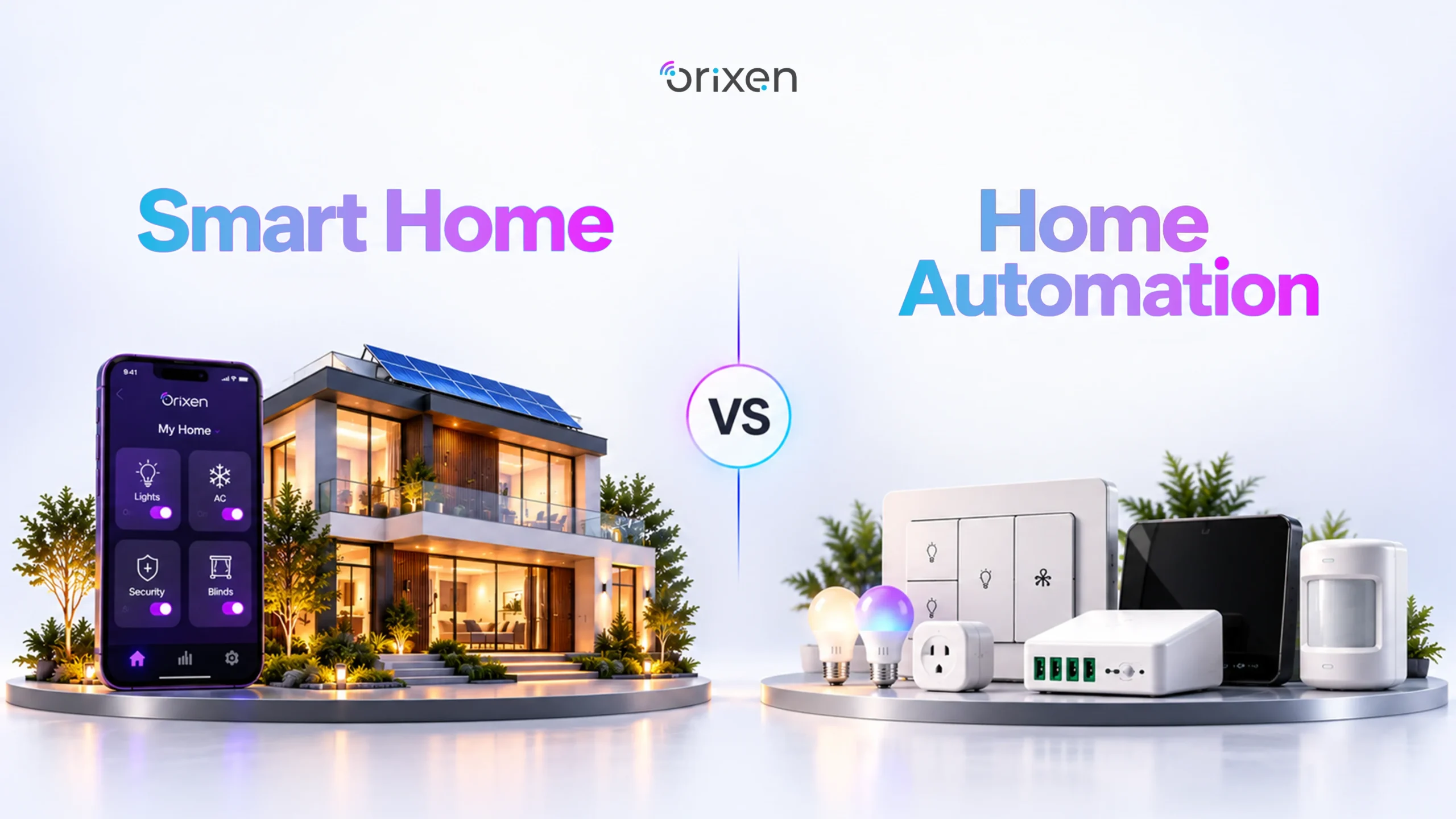
- A smart home is the broad concept. Home automation is the system that makes it work.
- Smart home devices can function individually. Home automation connects them into one coordinated system.
- According to Mordor Intelligence, the global smart home market reached USD 164.13 billion in 2026, growing toward USD 311.22 billion by 2031.
- You can own smart home devices without ever having true home automation.
- Full home automation requires unification, a central app, shared logic, and devices that talk to each other.
Ask ten homeowners what a “smart home” means, and you will get ten different answers. One points to a smart bulb he controls from his phone. Another means his whole house runs on a single automated system. A third just bought a voice assistant and calls it a day.
This confusion is not accidental. Smart home and home automation get used interchangeably so often that most people assume they are the same thing. They are related, but they are not identical. Understanding the difference matters, especially before spending money on either one.
This guide breaks down smart home vs home automation clearly, what each term means, how they work, and which one you are really after.
What Is a Smart Home?
A smart home is any residence equipped with internet-connected devices that can be controlled remotely, whether individually or together. The defining feature is connectivity. A single WiFi-enabled bulb, controlled from an app on your phone, technically makes your house a smart home, even if nothing else in it is connected.
A smart home does not require devices to work together. You can own a smart lock from one brand, a smart camera from another, and a smart plug from a third, each opened in its own separate app, with zero interaction between them. It is still a smart home, just a disconnected one. This is the most common entry point for most households.
According to Mordor Intelligence’s 2026 market analysis, the global smart home market reached USD 164.13 billion in 2026, with global smart home device shipments approaching 1.25 billion units, reflecting just how widespread individual smart home devices have become, even without full automation behind them.
What Is Home Automation?
Home automation is the system layer that connects individual smart devices into one coordinated, intelligent environment. It is not about owning connected gadgets. It is about making those gadgets work together, automatically, based on rules, schedules, and triggers.
A true home automation system does not ask you to open five different apps to turn off your house for the night. It recognizes a single command, Leaving Home, and executes multiple actions at once: locking the door, arming the cameras, switching off the lights, and adjusting the thermostat, all without you touching each device individually.
This is the core distinction. Smart home devices can exist in isolation. Home automation exists specifically to remove that isolation.
Smart Home vs Home Automation: Side-by-Side Comparison
Factor | Smart Home | Home Automation |
Core idea | Individual connected devices | Devices working together as one system |
Control method | Separate apps per device or brand | One unified app or central hub |
Automation logic | Often manual, device by device | Automated scenes and triggers across devices |
Example | Turning off a smart bulb from its app | Leaving Home scene locking doors, dimming lights, arming cameras together |
Scalability | Can become cluttered as devices increase | Designed to scale, more devices strengthen the system |
Typical starting point | A single smart plug or bulb | A planned, multi-device system from the outset |
Data and hosting | Varies by brand, often cloud-dependent | Can be centralized, including local hosting options |
How Does Home Automation Work?
Understanding how home automation works requires looking past individual devices and toward the layer that connects them.
1. Connected Devices as Building Blocks
Every automation system starts with the same raw materials as a smart home: bulbs, plugs, switches, locks, cameras, sensors. On their own, these are just home automation devices with remote control capability. Automation begins only once they are brought together under shared logic.
2. A Central Hub or Unified App
This is the defining layer. Instead of five apps, automation systems use one central hub. Every connected device reports to this hub, and every command, whether typed, tapped, or spoken, routes through it.
3. Scenes and Triggers
Automation logic is built around rules: if motion is detected after 11 PM, turn on the hallway light; if the front door unlocks, disable the away-mode alarm automatically. These triggers remove the need for manual control entirely, once configured.
4. Sensors and Context Awareness
Beyond simple on or off control, automation systems use sensors, motion, temperature, light level, to make decisions based on real-time context. A connected home built this way reacts to its environment instead of waiting for a command.
5. Remote and Voice Access
Both smart homes and automated homes support remote and voice access. The difference is scope. In a smart home, voice control might turn off one bulb. In a home automation system, the same voice command can trigger an entire sequence of coordinated actions.
Smart Home Technology: The Devices Behind Both Approaches
The actual hardware used in smart home technology overlaps completely between the two approaches. The same smart bulb, smart lock, or smart camera can exist purely as a standalone smart home device, or as one node in a larger automated system.
What changes is not the device. It is the architecture behind it. A smart home built from disconnected devices leaves each one operating independently. A home automation system built around the same devices adds the coordination layer that makes them act as one.
This is why two households can own nearly identical devices, same bulbs, same locks, same cameras, yet have completely different experiences. One opens five apps every night. The other says one phrase, or taps one button, and the entire house responds.
Why the Difference Matters
This distinction is not just semantic. It affects cost, planning, and long-term satisfaction with your setup.
Buying individual smart home devices piecemeal is cheap and low-risk. A single smart plug costs very little, and there is no commitment beyond that one purchase. But as the number of devices grows, so does the friction: more apps, more logins, more things to manage separately, with diminishing convenience despite increasing cost.
Investing in a properly designed home automation system from the start requires more upfront planning and typically more cost, but it scales cleanly. Every new device added strengthens the system rather than adding another app to juggle.
Homeowners who start with scattered smart devices and later want true automation often end up replacing incompatible hardware, devices that cannot integrate into a unified platform, adding cost that proper planning would have avoided.
Can You Have a Smart Home Without Home Automation?
Yes, and most households technically do. Owning a smart speaker, a couple of smart bulbs, and a video doorbell makes your house a smart home by definition. None of these devices need to communicate with each other for that label to apply.
This is perfectly reasonable for many households. Not everyone needs or wants coordinated scenes and triggers. Some people simply want the convenience of controlling a few specific things remotely, without investing in a larger system.
Can You Have Home Automation Without It Being Called a Smart Home?
Technically, home automation requires smart, connected devices by definition, so the terms overlap here. But it is worth noting that automation predates modern smart home branding. Basic programmable timers for lights and sprinklers existed decades before WiFi devices and mobile apps, representing an early, limited form of automation without any of today’s connectivity or intelligence.
Modern automated home systems simply extended this older concept with internet connectivity, remote access, and far more sophisticated logic than a simple timer ever offered.
Choosing Between Smart Devices and Full Automation
Deciding which approach fits your household comes down to a few honest questions.
How many devices do you realistically plan to use? A handful of smart plugs and bulbs rarely justifies the cost of a full automation system. But if you are planning lighting, security, climate, and gate control across an entire property, disconnected devices quickly become unmanageable.
How much daily friction are you willing to tolerate? Opening multiple apps each night is not a dealbreaker for everyone. For some households, it is a genuine daily annoyance worth solving properly.
Do you care where your data lives? This matters most for cameras and locks. Scattered smart home devices from different brands often route data through separate third-party cloud services, each with its own privacy practices. A unified system can centralize this, including options for local network hosting rather than relying entirely on external servers, as seen in some of the best smart home automation systems in Lahore.
Are you planning to expand later? If today’s single smart bulb is likely to become tomorrow’s fully automated house, starting with automation-compatible devices avoids costly replacements down the line.
The Role of Ecosystems and Compatibility
Whether you are building a smart home or a true automation system, compatibility determines how far you can go. Most devices sold today, regardless of brand, run on common platforms like Tuya or Smart Life underneath their own branded apps.
This shared foundation is what makes true home automation achievable even when devices come from different manufacturers. A smart bulb from one company and a smart lock from another can often be unified under the same automation hub, provided both support compatible protocols.
Checking this compatibility before purchasing is the single most important step in avoiding the common trap of ending up with a smart home that never becomes a properly automated one.
From Scattered Devices to a Real System
Most homes do not begin with a grand automation plan. They begin with curiosity: one smart bulb, tested out of interest, followed by a plug, then a lock. This is a perfectly normal starting point, and it is exactly how most connected home journeys actually begin.
The transition from smart home to home automation happens when someone decides those scattered devices deserve to work together. It is the point where five apps become one, and manual control becomes automatic logic triggered by real routines: arriving home, leaving for work, going to sleep.
This transition does not require replacing everything you already own. In most cases, it means bringing existing compatible devices under one unified platform, and filling in the remaining gaps with devices designed for that system from the start. A clear home automation cost breakdown helps plan this transition realistically.
Conclusion
Smart home and home automation are not competing concepts. One is the foundation. The other is what you build on top of it. Every home automation system is built from smart home devices, but not every smart home reaches the level of true automation.
Understanding this distinction before buying anything changes how you shop, what you prioritize, and how satisfied you will be with the result six months later. A handful of disconnected gadgets might solve a specific problem today. A properly unified automation system solves the much larger problem of managing an entire home efficiently, securely, and with far less daily friction.
Why Orixen AI?
Orixen AI designs complete home automation systems for homeowners across Lahore, unifying lighting, security, climate, gates, and energy monitoring into a single app, built from the ground up rather than stitched together from incompatible devices.
Book a free consultation with Orixen AI and turn your smart home into one that works as a system.
Frequently Asked Questions
What is the difference between a smart home and home automation?
A smart home is any home with internet-connected devices that can be controlled remotely, even individually. Home automation is the system layer that connects those devices into one coordinated environment with shared logic, scenes, and triggers.
How does home automation work?
It works by bringing connected devices under a central hub or unified app, then applying rules and triggers so they act together. Sensors add context awareness, while remote and voice access let you control the entire system with a single command.
What devices are used in home automation?
Common devices include smart bulbs and switches, locks, cameras, sensors, thermostats, smart plugs, gate controllers, motorised curtains, and energy monitoring hardware. The same devices power both smart homes and automation systems, the difference is the architecture behind them.
What are the benefits of home automation?
Key benefits include one app instead of many, automated scenes that reduce daily friction, better energy visibility and savings, unified security monitoring, and a system that scales cleanly as you add more devices.
How much does a home automation system cost?
Cost depends on home size, device count, and brand tier. A basic 10 Marla setup typically starts around PKR 3-5 lakh, while a fully integrated 1 Kanal system with security, energy management, and solar can range from PKR 15-30 lakh.
Can home automation control lights, AC, and curtains?
Yes. Lighting, climate control, and motorised curtains are among the most common automation categories, and they can all be tied into the same scenes, schedules, and voice commands as your security and energy systems.
Can smart home systems improve home security?
Yes. Cameras, motion sensors, smart locks, and gate automation can be unified into one platform with real-time alerts, access logs, and automated arming or disarming based on whether you are home or away.
What is the difference between smart devices and automated devices?
A smart device can be controlled remotely on its own, often through its own app. An automated device is one that has been integrated into a larger system, allowing it to respond to triggers and work in coordination with other devices.
Is professional installation required for home automation?
Not always, but it is strongly recommended for full systems. Professional design and installation ensure devices are compatible, properly integrated, and configured around your layout and routines rather than stitched together after the fact.
Can I start with a few smart devices and add automation later?
Yes, and most households do exactly that. The key is choosing automation-compatible devices from the start, so your existing hardware can be brought under one unified platform later without needing to replace it.