
Key Takeaways
- Home automation devices cost in Pakistan starts as low as Rs. 1,500 for a basic smart plug and scales up to Rs. 150,000+ for premium biometric locks.
- Most IoT devices for home automation connect over standard 2.4GHz WiFi, no special infrastructure needed.
- Smart bulbs and plugs are the most beginner-friendly entry point into home automation.
- Devices from different brands can usually work together if they support the Tuya or Smart Life ecosystem.
- A proper home automation system unifies devices into one app, rather than leaving them scattered across five different apps.
Most smart homes in Pakistan do not start with a grand plan. They start with one Rs. 1,500 smart bulb, bought out of curiosity, controlled from a phone for the first time. A few weeks later, a smart plug joins it. Then a camera. Then a lock.
This is how nearly every household actually builds a smart home, one device at a time, not with a single massive installation on day one.
This guide walks through the full range of home automation devices available in Pakistan today, what each one actually does, what it costs, and how to combine them into something more useful than a pile of disconnected gadgets.
What Are Home Automation Devices?
Home automation devices are electronic products that connect to WiFi or a smart hub, letting you control them remotely through a mobile app, voice assistant, or automated schedule.
Unlike a standard appliance with a single manual switch, a smart device can be turned on, off, dimmed, scheduled, or monitored from anywhere with an internet connection.
The category is broad. It includes lighting, plugs, locks, cameras, sensors, thermostats, and switches, each solving a specific problem, and each capable of working alone or as part of a larger connected system.
Types of Home Automation Devices
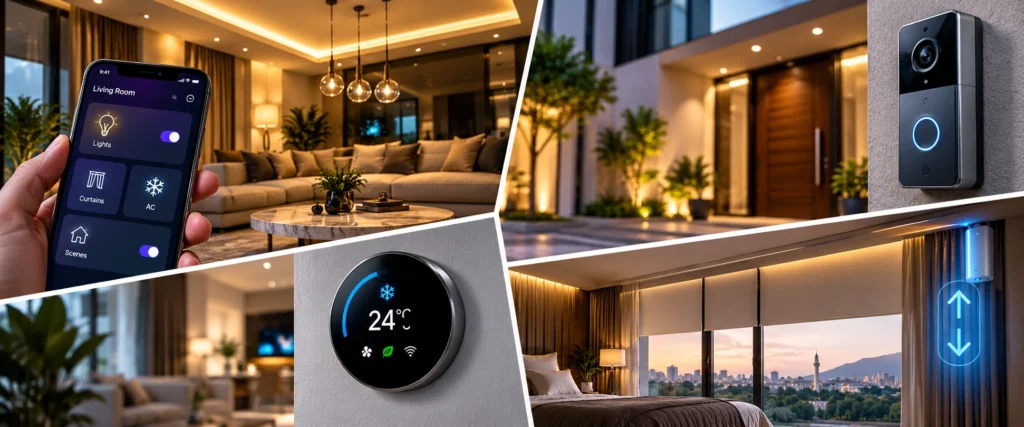
Here are the main types of home automation devices used by households across Pakistan today:
Smart Bulbs and Lighting
Smart bulbs are the most common entry point into smart lighting automation. They screw into any standard fixture and connect directly to WiFi, no separate switch replacement required.
Basic WiFi color-changing bulbs start around Rs. 1,750, while premium options like Philips Wiz smart bulbs range from Rs. 3,800 to Rs. 8,800 depending on wattage and finish. Smart LED strip lights, popular for accent lighting and living rooms, typically cost between Rs. 3,800 and Rs. 8,000.
Smart Plugs
A smart plug is the fastest way to convert any ordinary appliance into a connected device. Plug it into your wall socket, plug your fan, lamp, or geyser into it, and control that appliance from your phone without touching any wiring.
Smart plugs in Pakistan start around Rs. 1,500 and go up to Rs. 6,500 for models with energy monitoring built in. This makes them one of the most affordable home automation gadgets available, and a common first purchase for beginners.
Smart Switches
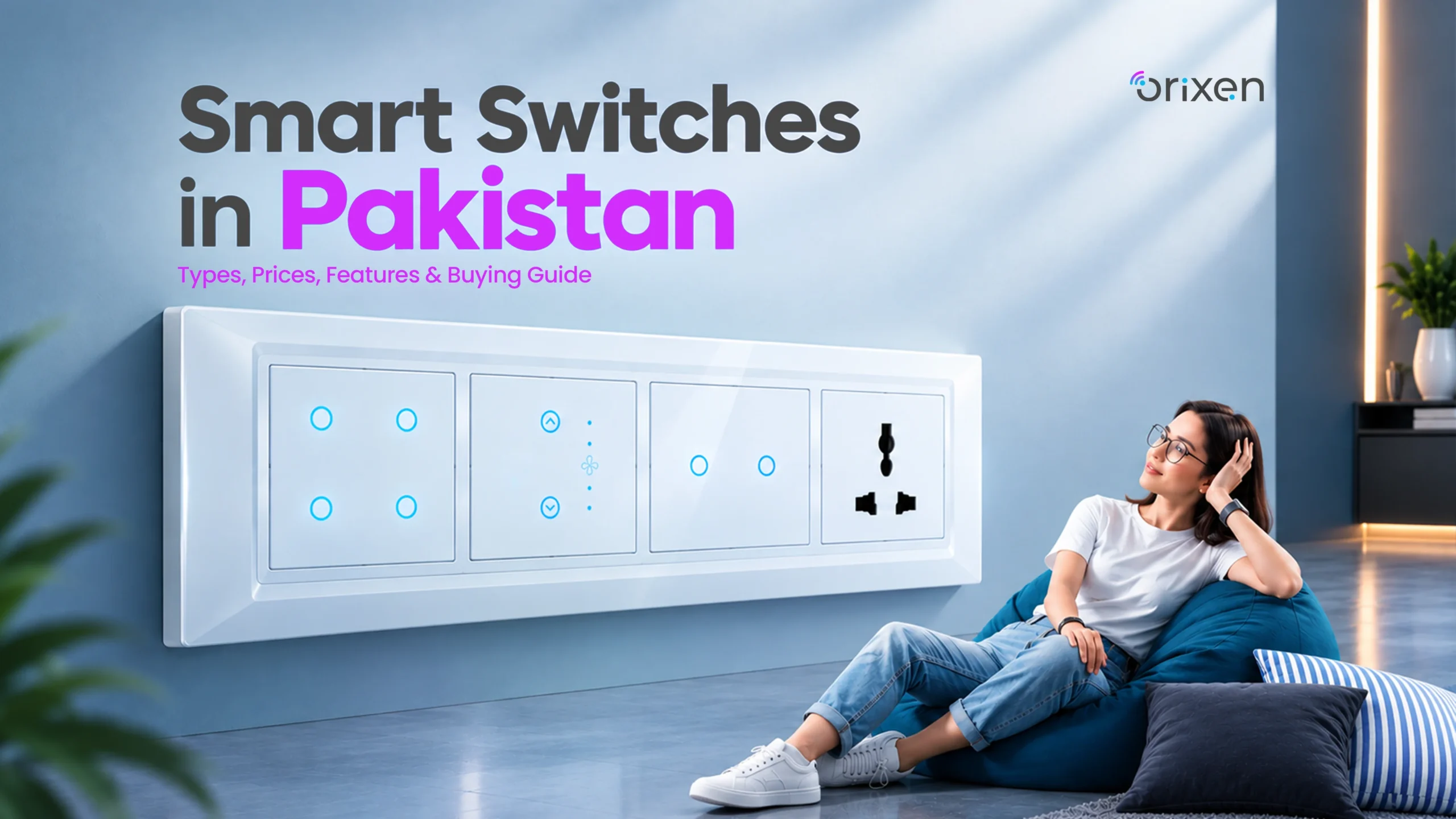
Unlike a plug, a smart switch replaces the wall switch itself, controlling the entire circuit rather than a single plugged-in device. This means any bulb or fan wired to that switch becomes smart automatically, without needing individual smart bulbs throughout the room.
Pricing ranges from roughly Rs. 1,500 for a single-gang switch to Rs. 9,000 for larger multi-gang touch panels.
Smart Locks
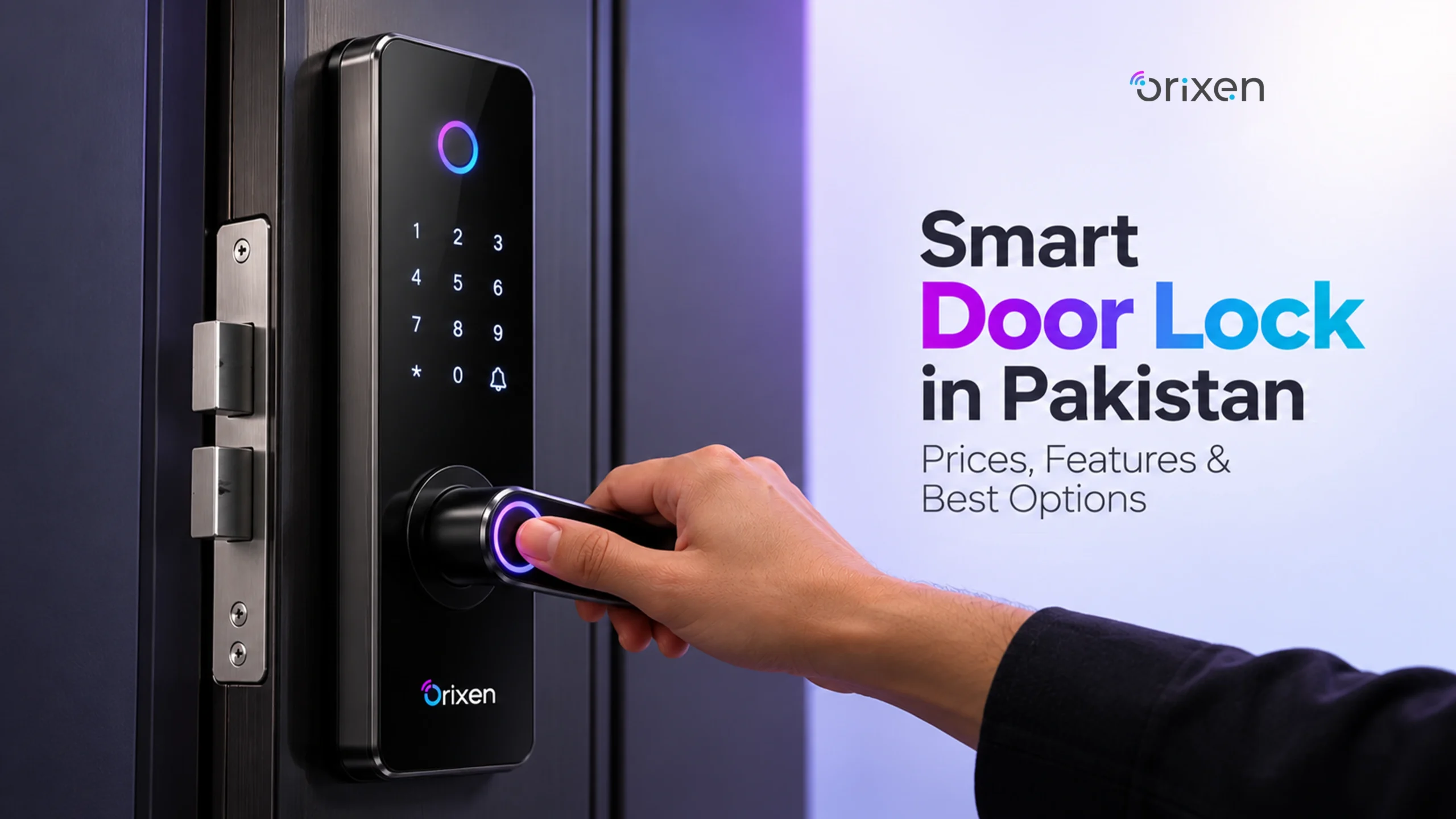
Smart door locks replace or upgrade a traditional key lock with fingerprint, PIN code, RFID card, or app-based access. Entry-level digital locks start around Rs. 6,500, while advanced fingerprint and biometric models range from Rs. 25,000 to 60,000. Premium face-recognition systems with AI features can reach Rs. 80,000 to 150,000.
Brands like Tosys, BlueDot, and Okasha have become widely available across Lahore, Karachi, and Islamabad, each offering official warranty and local installation support.
Smart Cameras and Security Sensors
Smart cameras provide live video feeds, motion detection, and two-way audio, all accessible from a mobile app regardless of your physical location.
Combined with door and window sensors, they form the backbone of smart security and CCTV setups focused specifically on protecting the home.
Entry-level WiFi cameras start around Rs. 4,000 to 6,000 for basic indoor models, with outdoor, weatherproof, and higher-resolution options costing more depending on features like night vision and pan-tilt tracking.
Smart Thermostats and Climate Devices
Smart climate control devices let you manage indoor temperature remotely, set schedules, and in some cases track energy usage per unit. For Pakistani homes running multiple split ACs, a smart IR controller can bring several units under one app without replacing the ACs themselves.
Smart Curtains and Motorized Blinds
Motorized curtain and blind motors automate natural light control, opening at sunrise and closing at sunset without manual adjustment. These integrate well with lighting schedules for a coordinated start and end to each day.
Voice Assistants and Hubs
Devices like Amazon Echo and Google Nest act as the command center for a smart home, letting you control multiple connected devices through spoken commands instead of opening an app each time.
Most home automation systems in Pakistan today are built around voice and hands-free control paired with a central app.
Home Automation Devices Cost in Pakistan: 2026 Price Table
Pricing depends mainly on device category, brand, and features like energy monitoring or biometric access. See our detailed home automation cost breakdown for a full room-by-room estimate.
Device Category | Typical Price Range (PKR) |
Smart WiFi Bulb (basic) | 1,750 – 3,000 |
Smart WiFi Bulb (premium, e.g. Philips Wiz) | 3,800 – 8,800 |
Smart LED Strip Light | 3,800 – 8,000 |
Smart Plug | 1,500 – 6,500 |
Smart Switch (single-gang) | 1,500 – 3,000 |
Smart Switch (multi-gang touch panel) | 4,500 – 9,000 |
Digital Door Lock (basic) | 6,500 – 15,000 |
Fingerprint / Biometric Door Lock | 25,000 – 60,000 |
Premium Face Recognition Lock | 80,000 – 150,000 |
Indoor WiFi Camera | 4,000 – 10,000 |
Smart Circuit Breaker | 3,000 – 8,000 |
Prices vary by brand and retailer. These ranges reflect typical Pakistani market rates as of 2026, based on listings from established local suppliers.
How Do Smart Home Automation Devices Work?
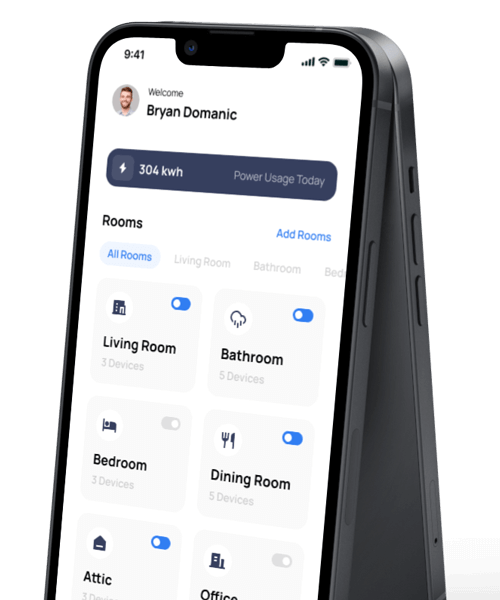
Every device in this category follows a similar basic principle. It connects to your home WiFi network, or in some cases a hub using Zigbee or Z-Wave, and pairs with a mobile app, commonly Tuya or Smart Life in Pakistan’s market.
Once paired, the app sends commands to the device over the internet, triggering it to turn on, off, dim, lock, or record, depending on its function.
Automation goes one step further. Instead of manually opening the app every time, you create rules: turn off all lights at 11 PM, unlock the front door when you arrive home, send an alert if motion is detected after midnight. These rules run automatically in the background, without requiring you to lift a finger once they are set.
Home Automation Devices for Beginners: Where to Start
Building a smart home does not require automating every room on day one. For home automation devices for beginners, the most practical starting point is usually one or two categories with immediate, noticeable benefit.
- A smart plug for your geyser or water pump lets you turn it off remotely if you forget, avoiding wasted electricity.
- A smart bulb or two in frequently used rooms introduces scheduling and remote control without any wiring changes.
- A single smart lock on the main door adds a meaningful security upgrade that is immediately noticeable day to day.
Once these smaller additions prove their value, expanding into switches, cameras, and full-room lighting becomes a natural next step rather than an overwhelming leap.
Different Smart Home Devices Working Together
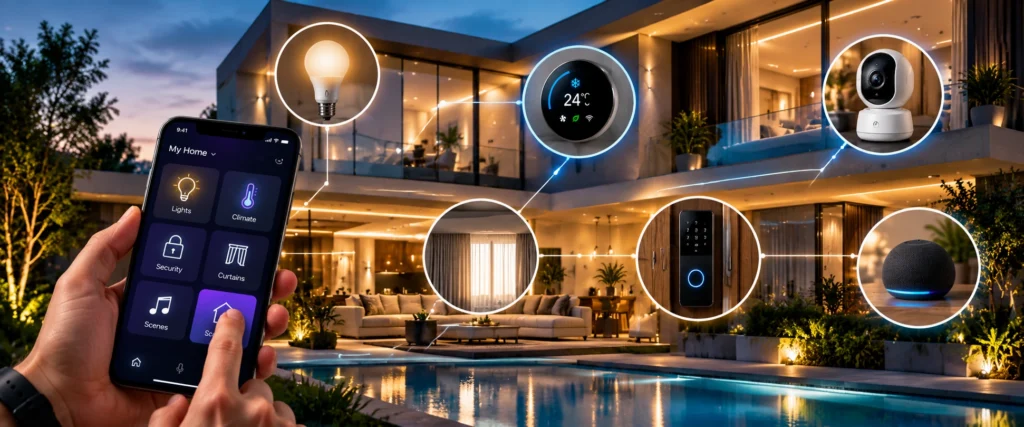
Most home automation products sold in Pakistan today, regardless of brand, run on the Tuya or Smart Life platform underneath their own branded app.
This means a smart bulb from one company and a smart plug from another can often be controlled from the same app, as long as both support Tuya integration.
This compatibility is what separates a true home automation devices list working as a coordinated system from a shelf of unrelated gadgets each requiring its own login.
Before buying a new device, checking Tuya or Smart Life compatibility avoids ending up with a product that cannot talk to anything else in your home.
WiFi Requirement
A standard 2.4GHz home WiFi connection is sufficient for the vast majority of devices sold in Pakistan, no special network infrastructure or wired ethernet required. Some functions still work locally without internet.
A smart switch’s physical touch panel continues operating as a normal switch during an outage. What stops working without internet is remote access from outside your home network, and any voice commands processed through cloud-based assistants like Alexa or Google Assistant.
Security
Security depends heavily on where your data is processed and stored. Reputable brands with genuine Tuya or Smart Life certification encrypt device communication and require account-based access, reducing the risk of unauthorized control.
The bigger consideration, particularly for cameras, is whether footage routes through third-party cloud servers or stays within your own home network.
Systems built around local hosting, rather than fully cloud-dependent architecture, offer stronger long-term privacy, especially for security-sensitive devices like door locks and cameras.
Buying from established local suppliers with official warranty, rather than unbranded clone products, also reduces the risk of devices with weak security practices or no ongoing firmware support.
From Individual Devices to a Full Home Automation System
Individual devices solve individual problems well. A smart lock secures your door. A smart plug controls your geyser. But the real shift happens when these separate devices stop operating independently and start working together as one coordinated system.
This is the difference between owning a collection of home automation equipment and owning an actual home automation system. A properly designed system unifies lighting, security, climate, and access control into a single app, with automation scenes that trigger multiple devices at once, a Leaving Home scene locking the door, arming the cameras, and turning off the lights simultaneously, rather than requiring five separate actions across five separate apps.
For homeowners who have already started with a smart bulb or two, this is usually the natural next question: how do you turn what you already have into something more complete? Comparing the best smart home automation systems in Lahore is a useful next step before deciding how far to take it.
Conclusion
Pakistan’s home automation market has matured well beyond a handful of imported gadgets. Today’s homeowner can choose from a genuinely wide range of home automation devices, priced for every budget, from a Rs. 1,500 smart plug to a complete, professionally installed whole-home system.
The best approach is not necessarily buying the most devices. It is choosing devices that solve real, specific problems in your home, and eventually bringing them together under one properly designed system rather than letting them remain scattered across separate apps indefinitely.
Why Orixen AI?
Orixen AI helps homeowners across Lahore move beyond individual smart gadgets into a complete, unified home control hub, covering lighting, security, climate, gates, and energy monitoring, all controlled from a single app.
Book a free consultation with Orixen AI and turn the devices you already have into a home that actually works together.
Frequently Asked Questions
What are home automation devices?
Home automation devices are electronic products, bulbs, plugs, locks, cameras, and switches, that connect to WiFi or a hub, allowing remote control through a mobile app, voice assistant, or automated schedule.
What devices are used in home automation?
Common devices include smart bulbs, plugs, switches, door locks, security cameras, thermostats, motorized curtains, and voice assistants, each controlling a specific function within a connected home system.
What are the most common smart home devices?
Smart bulbs, smart plugs, and smart switches are the most widely used, followed closely by smart locks and WiFi cameras, due to their affordability and easy, wiring-free installation.
Which home automation devices are best for beginners?
Smart plugs and bulbs are ideal starting points. They require no wiring changes, cost as little as Rs. 1,500, and immediately demonstrate the convenience of remote and scheduled control.
How do smart home automation devices work?
Devices connect to home WiFi or a hub, pairing with an app like Tuya or Smart Life. Commands sent through the app trigger the device to turn on, off, lock, or record.
Can different smart home devices work together?
Yes, if they share a common platform. Most Pakistani-market devices run on Tuya or Smart Life underneath their branded app, allowing different brands to be controlled from one unified interface.
Can home automation devices be installed in an existing home?
Yes. Smart plugs and bulbs need no installation at all, while switches and locks are direct replacements for existing hardware, requiring minimal wiring adjustment in most Pakistani homes.
Do home automation devices require WiFi?
Most do, for remote access and voice control. A standard 2.4GHz home connection is sufficient. Some local functions, like a switch’s physical panel, still work during an internet outage.
Are smart home automation devices secure?
Security depends on the brand and data hosting method. Certified Tuya or Smart Life devices from reputable suppliers offer encrypted, account-based access, though local data hosting provides stronger long-term privacy.
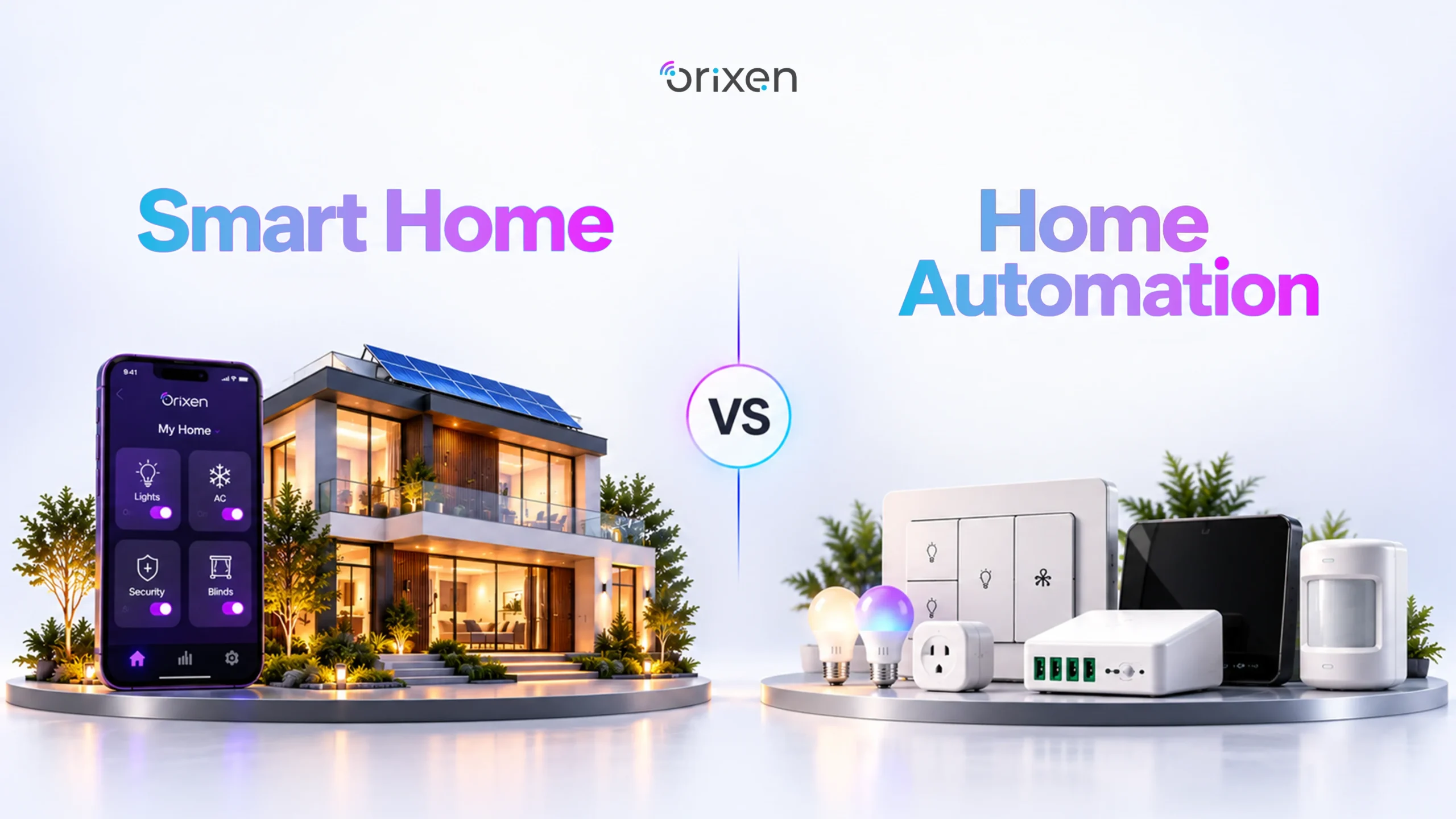
What is the difference between smart home devices and home automation devices?
Smart devices operate individually through separate apps. Home automation devices, when unified into one system, communicate with each other, enabling coordinated scenes rather than isolated, one-off remote control.




One Response