Everything you need to know about smart home automation in Pakistan: how it works, real installation costs, and what to expect from lighting, security, and climate systems in 2026.
Summary
- Smart home automation unifies lighting, security, climate, gates, and energy monitoring into a single intelligent platform. It is fundamentally different from buying isolated smart gadgets.
- The global smart home market is projected to reach USD 848.47 billion by 2034 at a 21.40 percent CAGR, with Asia Pacific as the fastest-growing region worldwide.
- Home automation costs in Pakistan typically range from PKR 80,000 for single-room setups to PKR 8 million or more for luxury 4 Kanal-plus estates, with most 1-2 Kanal homes falling between PKR 1.2 million and PKR 3.5 million for comprehensive systems.
- Local data hosting architecture offers stronger privacy protection for smart home security in Pakistan than fully cloud-dependent alternatives, particularly for camera footage.
- Energy monitoring at the appliance level is one of the most practical ways automation delivers measurable electricity savings.
- Well-designed systems maintain local functionality during internet outages, a critical consideration given Pakistan’s variable connectivity.
- Choosing the right provider matters as much as choosing the right technology. Proper home assessment, single-app integration, and long-term support separate genuine system designers from basic device installers.
When Talha, a homeowner in DHA Phase 6, Lahore, first heard the term smart home automation, he pictured something out of a Hollywood film: a house that talks back, robotic arms serving tea, and a price tag reserved for tech billionaires.
Six months later, his 1 Kanal home responds to his voice, his gate opens for his car before he reaches it, and he watches his electricity consumption drop appliance by appliance from an app on his phone. The gap between what people imagine smart home automation to be, and what it actually is and costs, has never been wider than it is in Pakistan today.
This is not a niche curiosity anymore.
This guide breaks down exactly how home automation systems work in Pakistan, what they realistically cost in 2026, and how to evaluate whether the investment makes sense for your home.
According to Statista’s global market projections, the smart home market is expected to surpass USD 260 billion by 2030, and Pakistan is no longer watching from the sidelines.
With over 127 million mobile broadband users in the country according to the Pakistan Telecommunication Authority (PTA), the infrastructure for connected living is already in nearly every pocket. What has changed recently is not just awareness.
Smart home automation solutions in Pakistan have finally become accessible to real families in real homes, not just to showcase villas.
What Is Smart Home Automation?
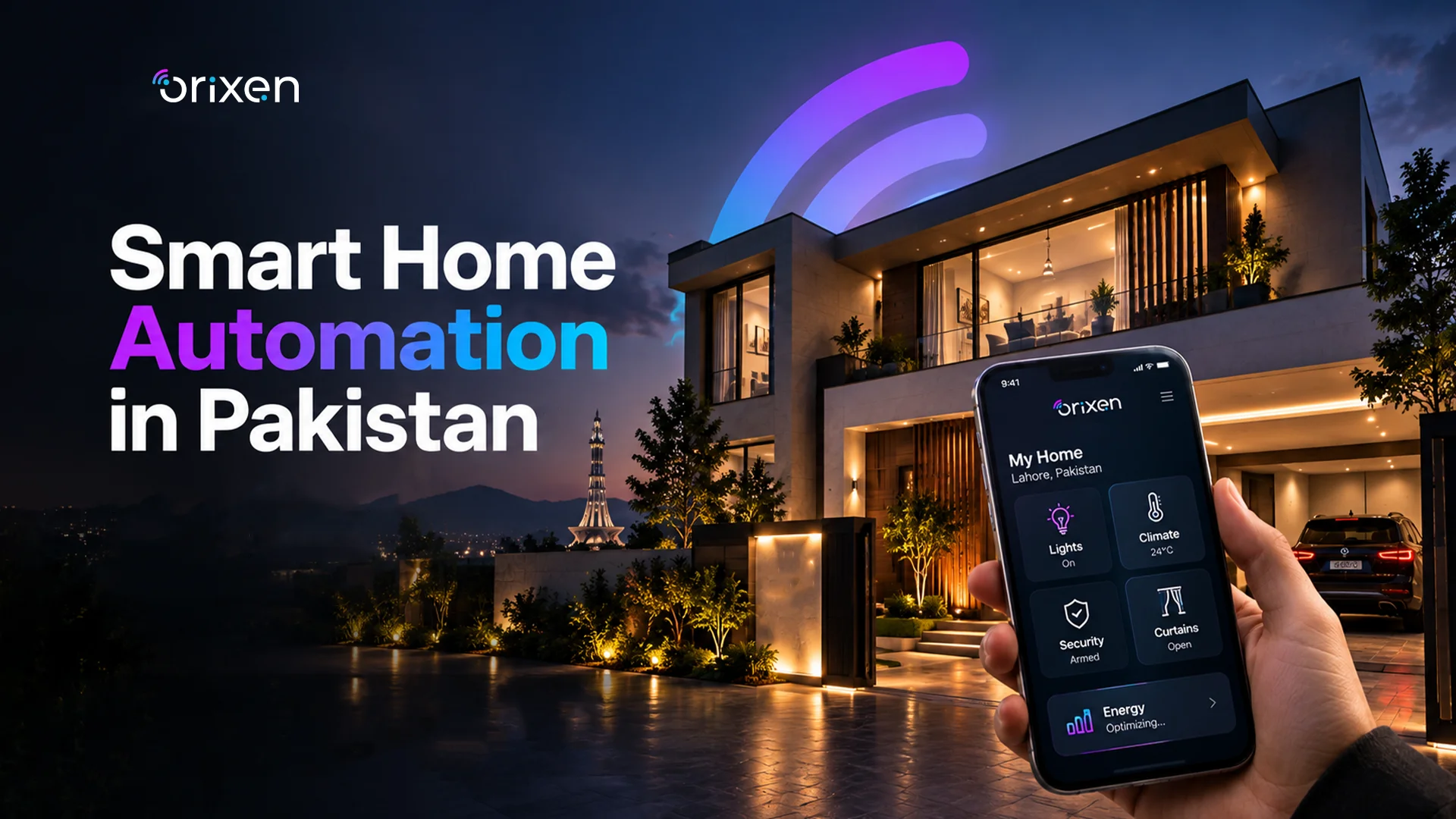
It is the integration of your home’s lighting, climate, security, gates, appliances, and energy systems into a single intelligent platform that you control through one app, your voice, or automated routines, rather than a collection of separate switches, remotes, and manual checks.
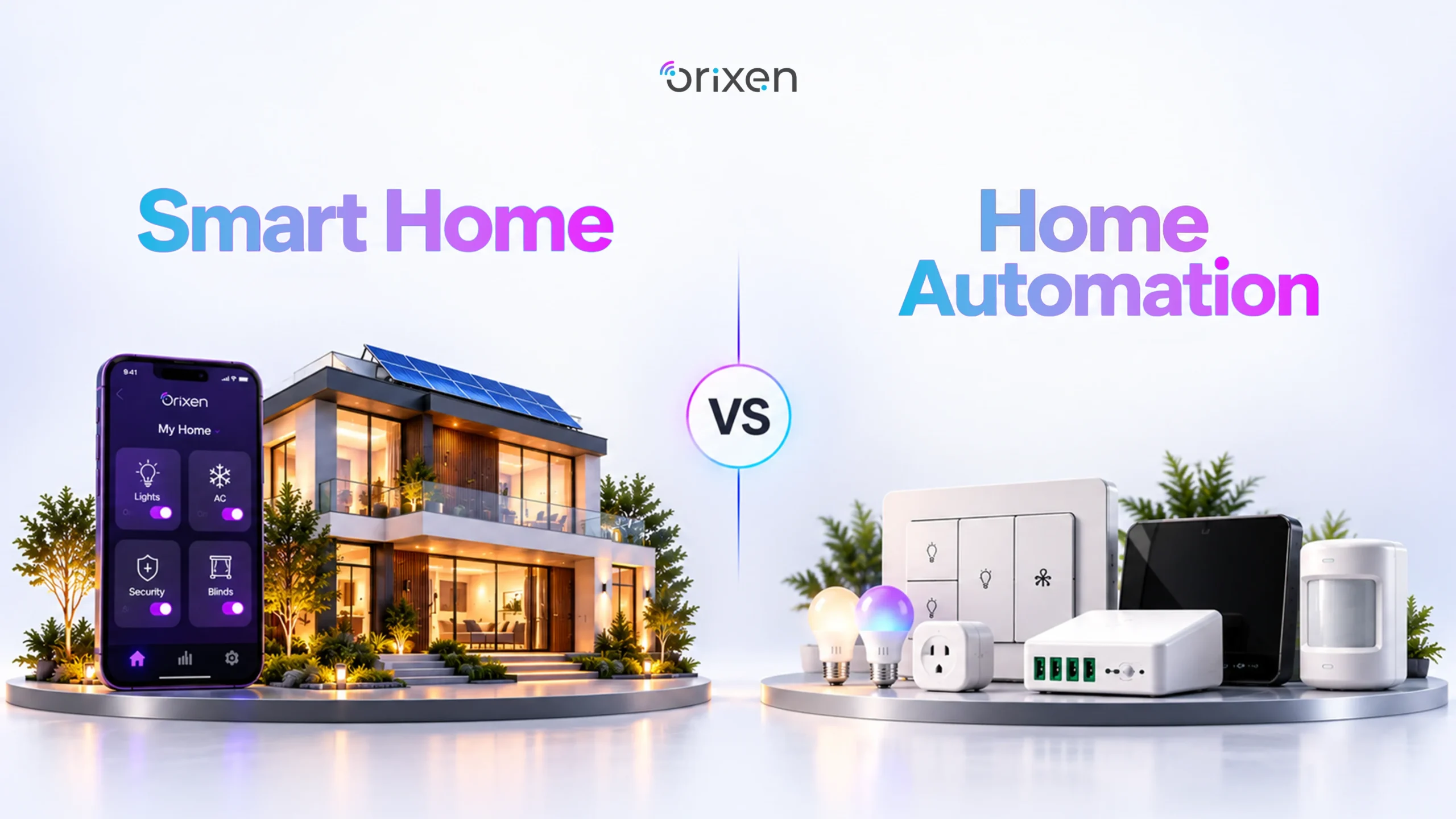
The distinction matters more than most homeowners realize. Buying a smart bulb from a local electronics market and connecting it to an app is not smart home automation. It is a smart device.
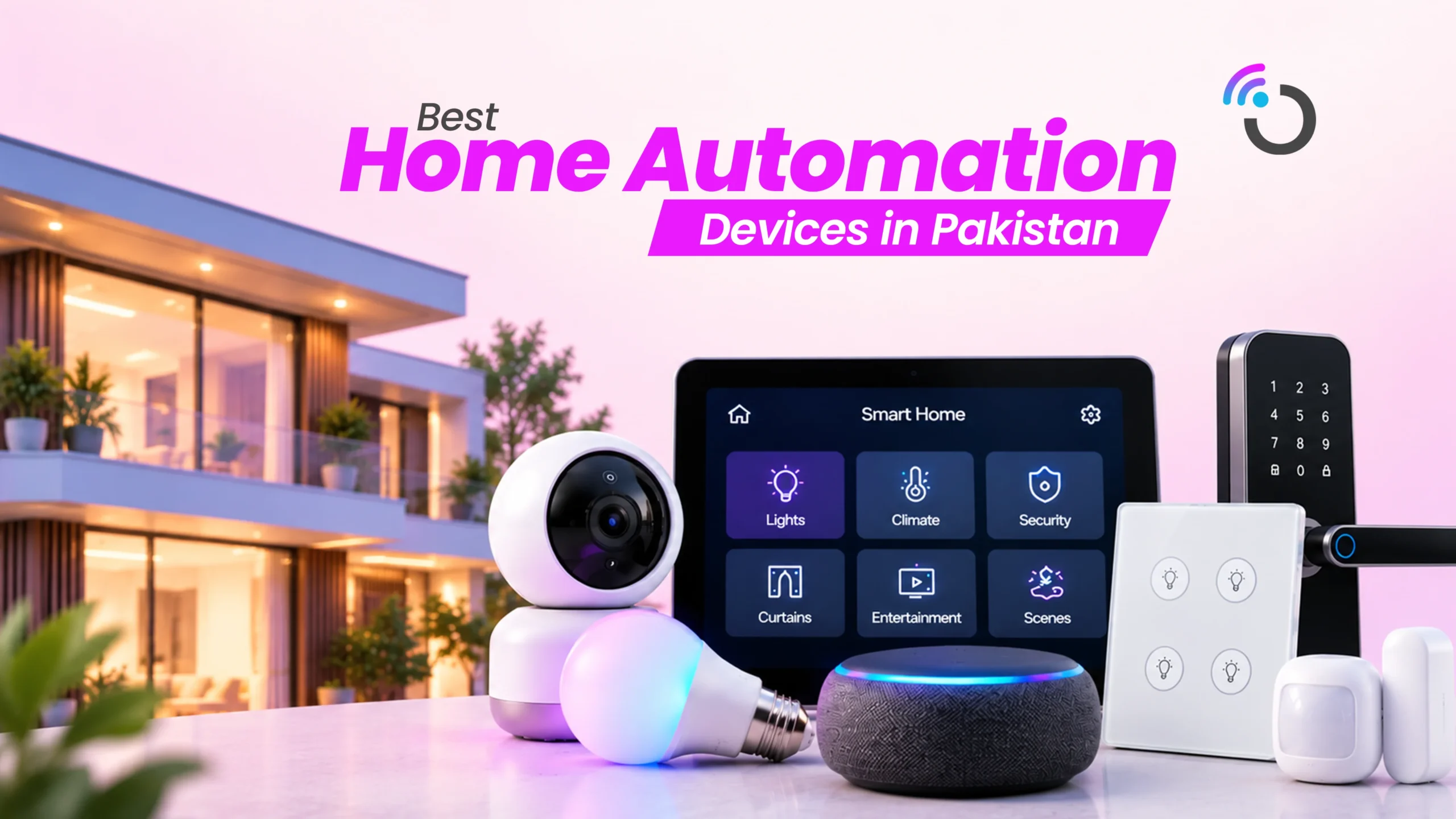
True smart home technology systems connect lighting, security cameras, door locks, gate motors, air conditioners, and energy meters into one coordinated ecosystem where these systems communicate with each other.
When you leave home, your gate closing can automatically trigger your lights to switch to away mode, your cameras to begin motion-based recording, and your AC to shift into an energy-saving schedule, without you touching a single switch.
According to Fortune Business Insights, the global smart home market was valued at USD 147.52 billion in 2025 and is projected to reach USD 848.47 billion by 2034, growing at a compound annual growth rate (CAGR) of 21.40 percent.
The Asia Pacific region, which includes Pakistan, is the fastest-growing segment worldwide, expanding at a CAGR of roughly 8.4 percent between 2024 and 2029 according to Clearly Automated’s 2026 market analysis. This is not a Western trend trickling down. It is a global shift that Pakistani households are now positioned to benefit from directly.
How Smart Home Automation Works in Pakistan
Understanding the mechanics behind smart home solutions demystifies what often feels like an intimidating technology decision.
1. The Central Hub or App
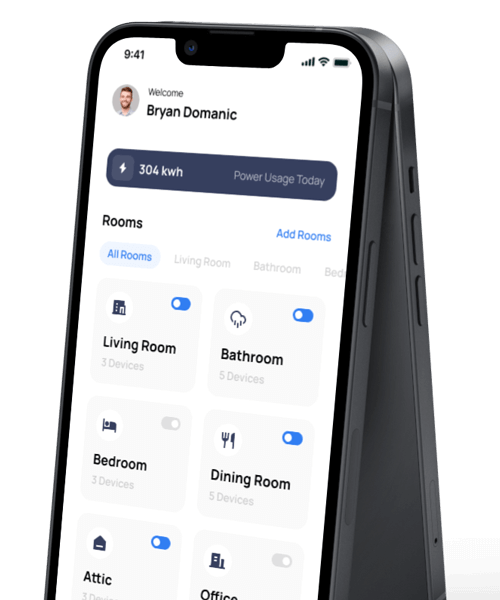
Every automation system needs a brain. Rather than controlling your AC through one remote, your lights through wall switches, and your cameras through a separate app, a proper system unifies everything into a single mobile application or central hub.
This is the single most important difference between smart devices and genuine automation: the unification layer.
2. Connected Devices and Sensors
Sensors and smart devices form the nervous system: motion sensors detect movement, door and window sensors detect entry, smart relays control lighting circuits, smart thermostats manage AC compressors, and cameras capture footage. Each of these connects wirelessly, typically via Wi-Fi, Zigbee, or Z-Wave protocols, to the central hub.
3. Automation Logic and Scenes
This is where intelligence enters the picture. Instead of manually adjusting ten things when you leave for work, you create automation scenes such as a Leaving Home scene that locks doors, arms security cameras, adjusts AC schedules, and switches off unnecessary lighting, all triggered by one tap, a voice command, or your phone’s GPS location leaving a geofenced radius around your house.
4. Local vs. Cloud Processing
A critical consideration for Pakistani homeowners is where your data lives. Some providers route everything through third-party international cloud servers, meaning your camera footage and usage patterns sit on servers you do not control.
Systems built with local hosting architecture keep sensitive data, particularly security footage, within your own environment, reducing dependency on external servers and strengthening smart home security standards.
5. Remote and Voice Access
Once connected, you can control your home from anywhere with an internet connection: checking cameras from the office, unlocking the door for a guest while you are travelling, or simply saying turn off all lights through voice and hands-free control and watching it happen instantly.
What Does Smart Home Automation Cost in Pakistan?
This is the question every homeowner actually wants answered, and it deserves a straight answer rather than vague ranges.
Home automation pricing depends on four major variables: the size of your home, the number of rooms and circuits being automated, the sophistication of security integration, and whether you are retrofitting an existing home or building automation into new construction.
We cover every bracket here, and you can also see our detailed home automation cost breakdown for a room-by-room and system-by-system view.
Final pricing depends on device count, brand tier, and whether automation is planned at grey structure or retrofitted later. Here is the detail:
Realistic Cost Brackets for Pakistani Homes
Entry-Level Automation (Single Room or Apartment)
Basic lighting control, one or two smart cameras, and a smart lock typically start in the range of PKR 80,000 to PKR 200,000. This suits apartments or homeowners wanting to test automation in a limited space before expanding.
Mid-Range Automation (5 Marla to 10 Marla Home)
Whole-home lighting control, smart climate management for 2-3 AC units, CCTV coverage for entry points, a smart lock, and basic energy monitoring typically range from PKR 400,000 to PKR 900,000, depending on the number of rooms and integration complexity.
Comprehensive Automation (1 Kanal to 2 Kanal Homes)
Full-home lighting scenes, whole-house climate control, comprehensive CCTV and security monitoring, gate automation with vehicle recognition, smart curtains, appliance-level energy monitoring, and solar integration typically range from PKR 1.2 million to PKR 3.5 million, scaling with the number of rooms, gates, and devices.
Luxury Villas and 4 Kanal-Plus Estates
For expansive properties requiring extensive zoning, multiple gate points, whole-property audio, home theatre integration, and advanced energy management with solar and battery storage, investments typically exceed PKR 4 million and can reach PKR 8 million or more, depending entirely on the property’s scope.
What Drives the Price Up or Down
Retrofit vs. New Construction
Automating an already-built home costs more than integrating automation during construction because wiring must work around existing walls and finishes.
According to Grand View Research’s 2026 industry report, retrofit installations remain a major growth segment globally precisely because most homeowners automate after moving in, not before.
Number of Circuits and Zones
Every additional room, light circuit, and AC unit adds incremental hardware and labor cost.
Security Sophistication
A basic two-camera setup costs dramatically less than a comprehensive CCTV network with AI-powered motion alerts, night vision, and gate-integrated vehicle recognition.
Local Hosting vs Cloud-Only Systems
Privacy-focused architecture with local data hosting sometimes carries a modest premium over basic cloud-dependent systems but delivers stronger long-term data control.
Brand and Component Quality
Using established, warrantied hardware versus unbranded imported components affects both upfront cost and long-term reliability.
Smart Home Automation Price in Pakistan: Category Breakdown
Breaking costs down by system category helps homeowners plan which automations deliver the most value for their budget, whether you start with smart lighting automation or a full security overhaul.
System Category | Typical Investment Range (PKR) |
Smart Lighting (per room) | PKR 25,000 – 60,000 |
Smart Lighting (whole home, 8-10 rooms) | PKR 250,000 – 600,000 |
Smart Climate Control (per AC unit) | PKR 30,000 – 70,000 |
CCTV and Security (4-6 cameras) | PKR 150,000 – 400,000 |
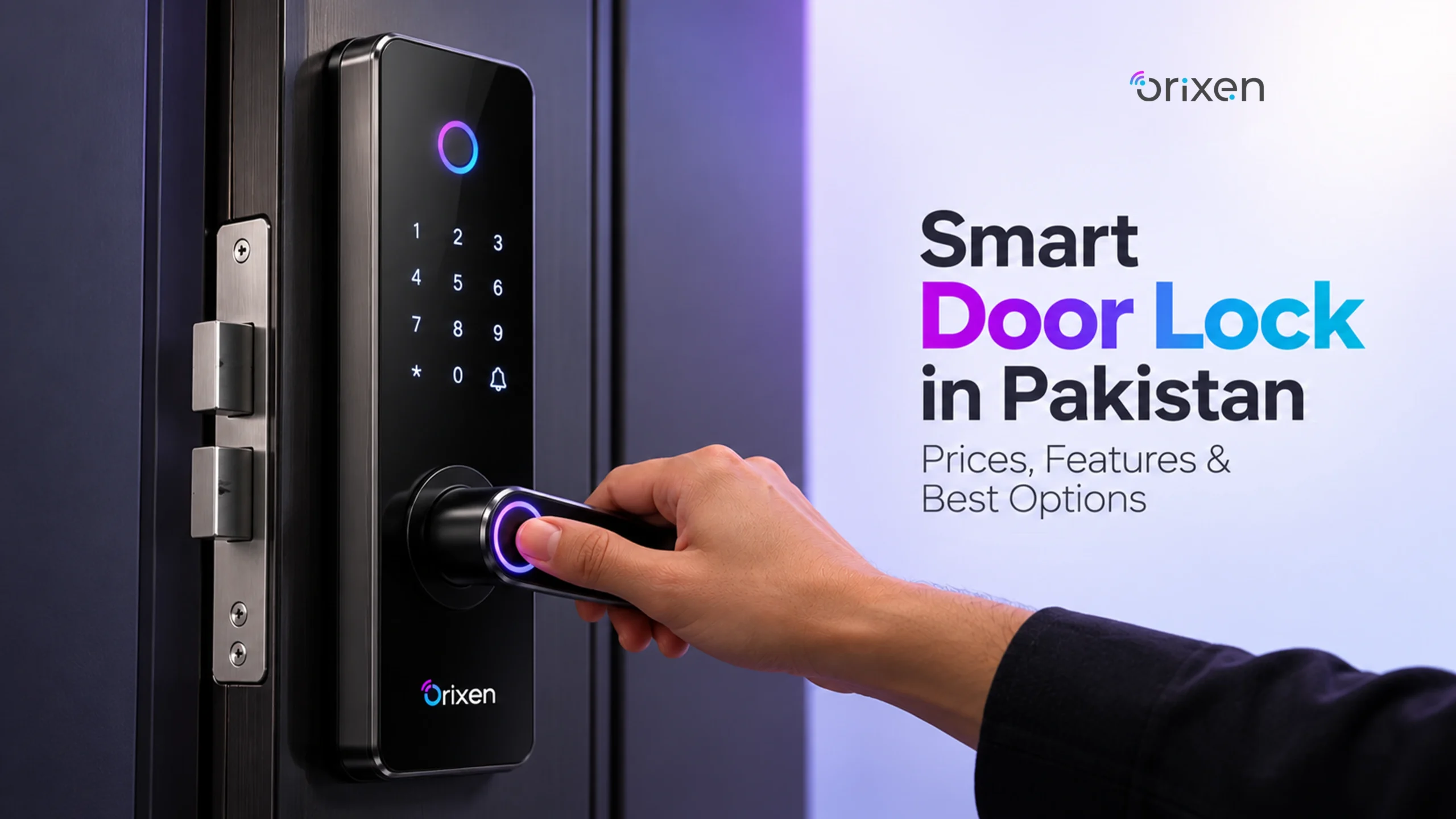
Smart Door Locks (per entry point) | PKR 35,000 – 90,000 |
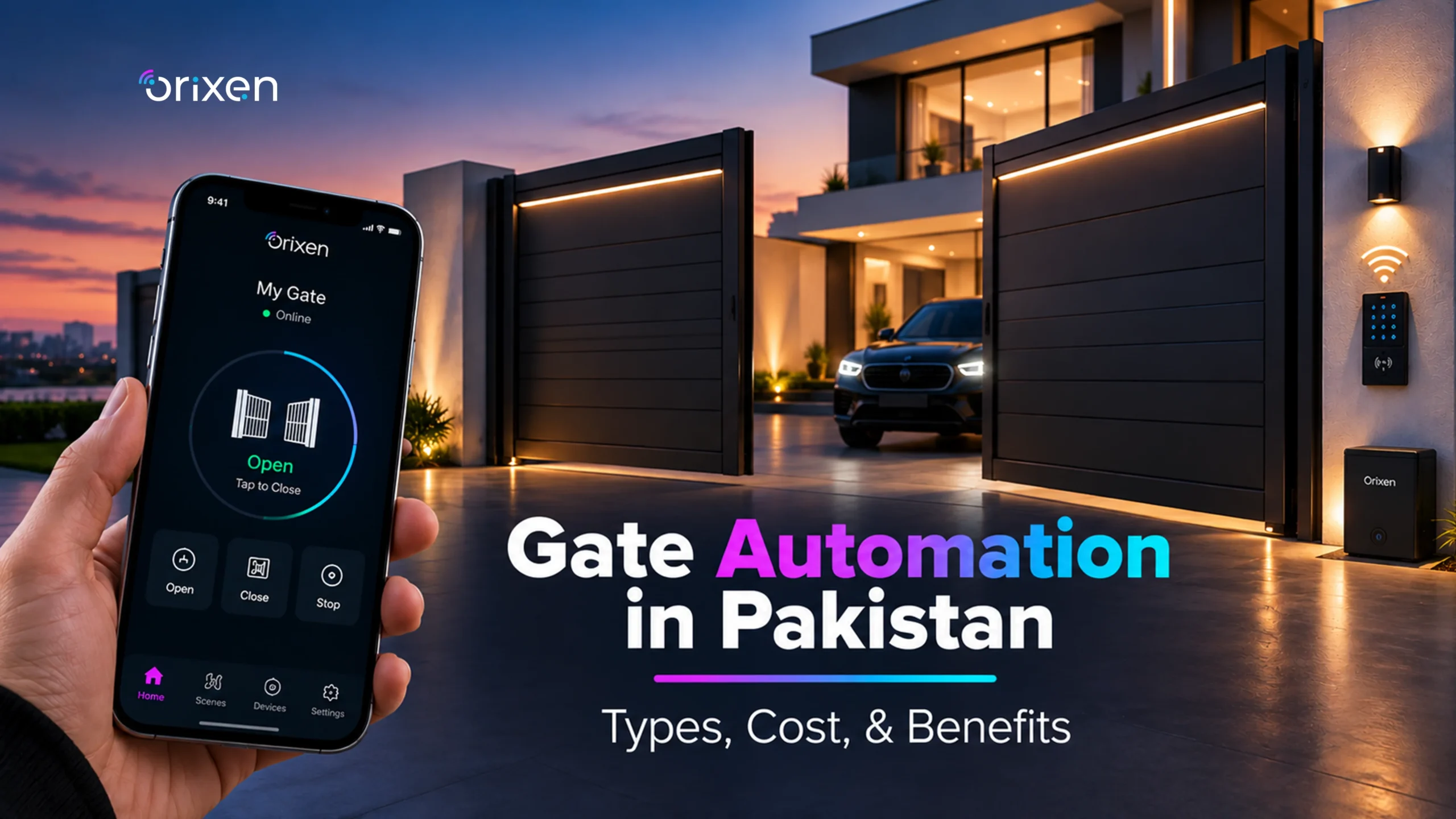
Gate Automation with Vehicle Recognition | PKR 200,000 – 500,000 |
Energy Monitoring (appliance-level) | PKR 100,000 – 300,000 |
Central Hub and Mobile App Integration | PKR 80,000 – 200,000 |
Note: these figures reflect typical market ranges in Pakistan as of 2026 and vary based on home size, brand selection, and installation complexity. A detailed, accurate quote requires an in-person or virtual home assessment.
Can Smart Home Automation Reduce Electricity Bills?
This is one of the most searched questions among Pakistani homeowners, and for good reason. With electricity tariffs rising steadily over recent years, energy efficiency is no longer a luxury consideration.
Smart home automation reduces electricity consumption through several concrete mechanisms rather than vague promises.
Occupancy-based AC scheduling ensures cooling only runs in rooms that are actually occupied.
Appliance-level energy monitoring shows homeowners exactly which devices, geysers, pumps, and ACs, are driving up their bill, enabling targeted behavior changes rather than blind guessing.
Automated lighting schedules eliminate the common problem of lights left on in empty rooms. For homes with solar installations, unified dashboards showing generation, consumption, and grid draw together help families maximize self-consumption of their own solar power rather than exporting it at unfavorable rates.
While exact savings vary by household size and existing habits, the consistent pattern across energy-monitoring adopters is straightforward: visibility drives behavior change.
When homeowners can see that a single geyser is consuming a disproportionate share of their monthly bill, they adjust usage accordingly, something impossible with a single, unexplained number on a monthly bill.
Popular Smart Home Automation Solutions in Pakistan
Pakistani homeowners are gravitating toward specific categories of automation based on genuine day-to-day pain points rather than novelty features.
Smart security and CCTV consistently rank as the top priority, driven by legitimate concerns about property safety, especially for homes where family members travel frequently or properties sit vacant for portions of the year.
Smart lighting automation follows closely, valued for both convenience and the ability to simulate occupancy while away.
Gate automation with vehicle recognition has grown rapidly in popularity in gated communities like DHA and Bahria Town, where the daily friction of manually opening gates adds up over months and years.
Energy management systems are the fastest-growing category as electricity costs climb, with homeowners increasingly viewing appliance-level monitoring as essential rather than optional.
Finally, voice and hands-free control has moved from novelty to genuine utility, particularly for elderly family members or households where hands-free convenience matters during daily routines.
Does Smart Home Automation Work Without Internet?
A common misconception is that a Wi-Fi outage renders an entire smart home useless. Well-engineered systems maintain core local functionality even without internet connectivity.
Locally hosted security systems, for example, continue recording footage on local storage even during an internet outage, syncing to remote access only once connectivity resumes.
Similarly, automation scenes and schedules that do not require external app confirmation, such as time-based lighting schedules, continue operating on local logic.
What does require internet is remote access, checking your cameras from outside your home network, or issuing voice commands processed through cloud-based natural language systems.
This is precisely why the architecture matters: systems designed with local processing in mind offer meaningfully more resilience during Pakistan’s occasionally inconsistent internet and power conditions than fully cloud-dependent alternatives.
How to Choose a Smart Home Automation Company in Pakistan
With growing demand comes a growing number of providers, ranging from established companies to informal installers assembling components without genuine system design expertise. A few criteria separate the two.
Look for companies that conduct a proper home assessment before quoting a price. A company offering fixed packages without seeing your home’s layout, wiring condition, or room count is guessing, not designing.
Ask whether the system unifies all functions into a single unified app, or whether you will end up juggling five different apps for lighting, security, and climate.
The latter defeats the entire purpose of automation. Inquire specifically about data hosting: does security footage stay local, or does it route through third-party servers you have no visibility into?
Confirm after-sales support exists beyond installation day, since automation systems require occasional tuning as your household routines evolve. Finally, ask about scalability.
A system installed today for three rooms should be able to expand to your whole home later without requiring a complete rebuild.
Conclusion
Smart home automation in Pakistan has moved past the experimental phase. It is no longer a question of whether the technology works in local conditions. It is a question of designing the right system for your specific home, budget, and lifestyle.
Whether you are motivated by security concerns, rising electricity bills, or simply the daily friction of managing a home manually, the technology and expertise now exist locally to deliver genuine, reliable automation, not imported gadgets bolted together without a coherent system behind them.
The homes that benefit most from automation are not necessarily the largest or most expensive ones. They are the ones where the system was properly designed around how the family actually lives, not around a generic package sold to everyone the same way.
See What Intelligent Living Looks Like in Your Home
Orixen AI designs, installs, and supports complete smart home automation systems across Lahore, from 10 Marla homes to 4 Kanal estates, with privacy-focused, locally hosted security architecture and one unified app for your entire home.
Frequently Asked Questions
How does smart home automation work in Pakistan?
It connects lighting, security, climate, and energy systems through sensors and a central hub or app, allowing unified control via smartphone, voice command, or automated routines like leaving-home or arrival scenes.
How much does smart home automation cost in Pakistan?
Costs range from PKR 80,000 for single-room setups to PKR 3.5 million for comprehensive 1-2 Kanal home systems, and PKR 4 million to 8 million or more for luxury estates, depending on scope and integration complexity.
What is included in a smart home automation system?
A typical system includes smart lighting, climate control, CCTV security, smart locks, gate automation, energy monitoring, and a central mobile app that unifies control of all connected devices in one place.
What are the most popular smart home automation solutions in Pakistan?
Security and CCTV rank highest, followed by smart lighting, gate automation with vehicle recognition, energy management systems, and increasingly, voice-controlled hands-free automation for daily convenience.
How much does smart lighting automation cost in Pakistan?
Per-room smart lighting typically costs PKR 25,000 to 60,000, while whole-home lighting automation for 8-10 rooms ranges from PKR 250,000 to PKR 600,000, depending on fixture count and scene complexity.
How much does smart home security automation cost?
Basic CCTV setups with 4-6 cameras range from PKR 150,000 to 400,000, while comprehensive security including smart locks and gate integration can range from PKR 400,000 to over PKR 1 million.
Can smart home automation reduce electricity bills?
Yes. Appliance-level energy monitoring, occupancy-based AC scheduling, and automated lighting reduce waste by giving homeowners visibility into consumption patterns, enabling targeted, informed usage changes.
Does smart home automation work without internet?
Partially. Locally hosted systems maintain core functions like recording and scheduled automations offline, but remote access and voice commands processed via the cloud require an active internet connection.
What is the difference between smart home devices and home automation?
Smart devices operate individually through separate apps, while home automation unifies multiple devices into one coordinated system where they communicate and trigger actions together as true automation.
How do I choose a smart home automation company in Pakistan?
Choose a company that conducts a proper home assessment, offers single-app integration, clarifies data hosting practices, provides after-sales support, and designs systems that scale as your needs grow.